Is the iPhone Duo worth it? For most people, not yet. For a specific kind of iPhone owner, it might be the most useful phone Apple has ever made. Apple’s first foldable starts at $1,999, opens into a 7.6-inch screen, and goes on sale October 23 after preorders opened on October 16. If you didn’t preorder, expect a wait: within hours, Apple’s U.S. store was quoting January 25 delivery for every configuration, and launch-day pickup slots were gone, MacRumors reported.
We haven’t used one. Everything below comes from Apple’s own specs, early hands-on reports from Apple’s September event, and published comparisons. Full reviews aren’t out yet. Most Apple watchers expect the review embargo to lift around October 20 or 21, a few days before launch.
What you actually get
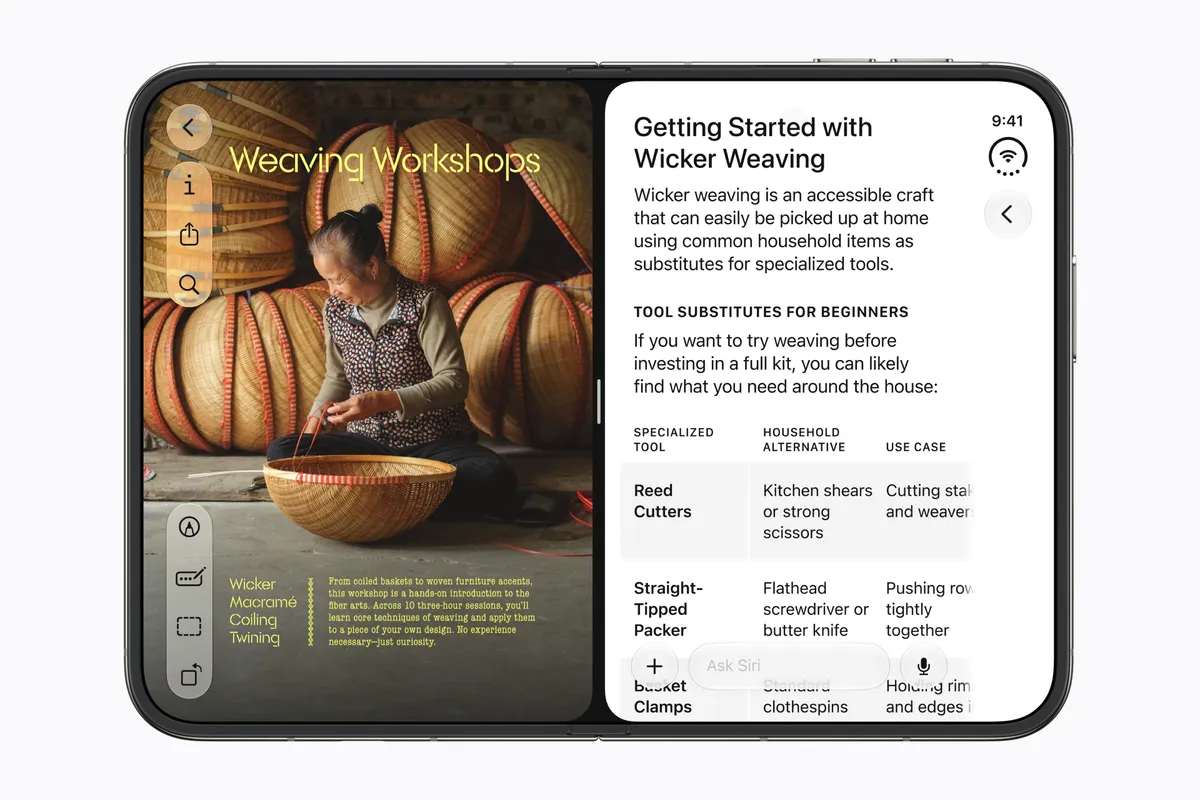
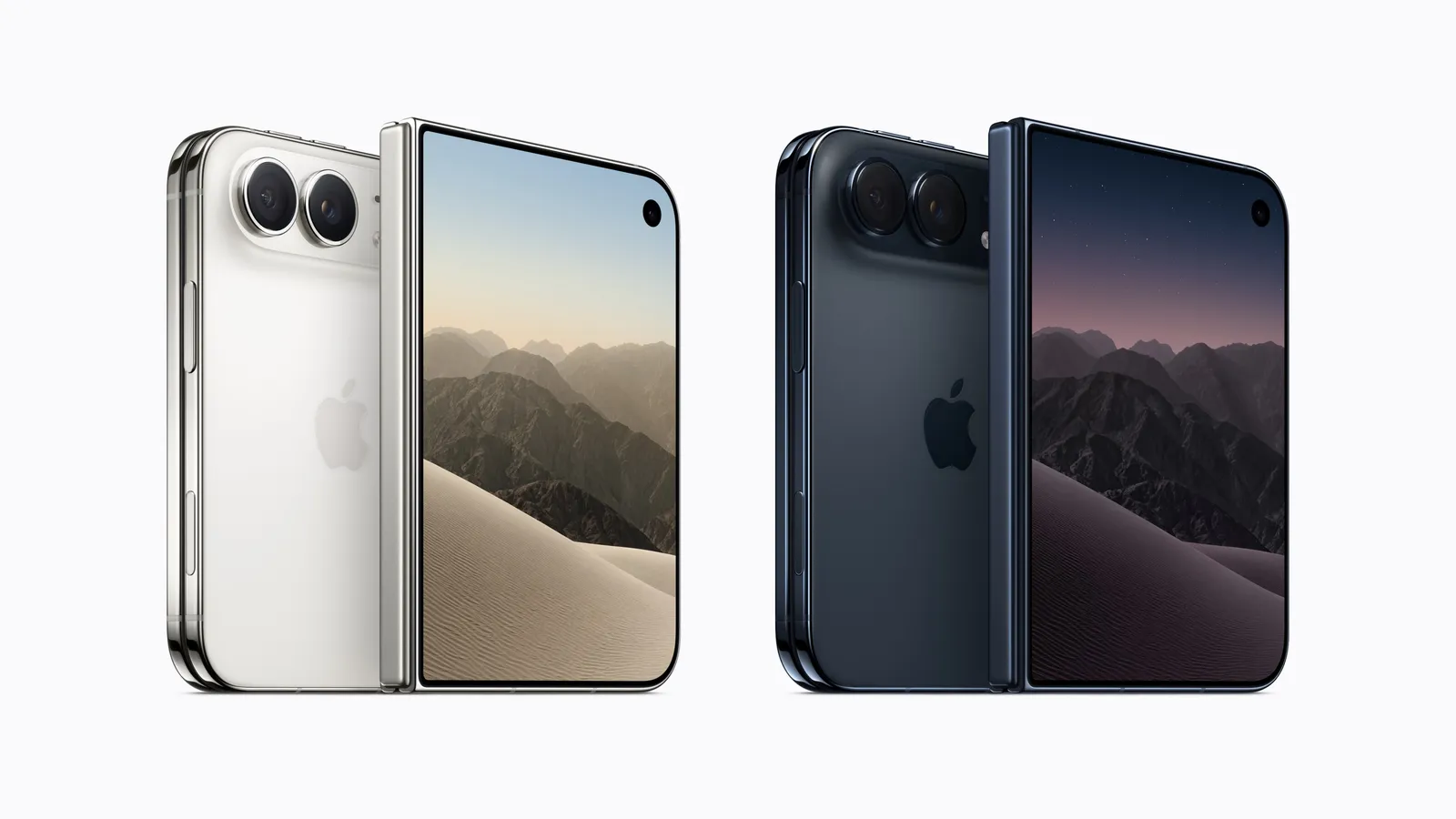
Closed, the Duo has a 5.4-inch outer display that Apple says gives you 90 percent of the screen area of an iPhone 18 Pro. Open, the 7.6-inch inner display is 50 percent larger than the iPhone 18 Pro Max’s.
Inside is the A20 Pro, the same chip as the iPhone 18 Pro models. Apple splits the battery into two cells, one on each side, and rates the phone for up to 24 hours of typical use. The body is grade 5 titanium, rated IP68 for water and dust. Storage comes in 256GB, 512GB, 1TB and 2TB, and the top model reaches $3,199, according to CNN.
There are notable changes from a normal iPhone. Face ID is gone, replaced by Touch ID in the side button. There’s no Action button. And the phone is eSIM-only everywhere.
On the software side, iOS 27 brings Split View to the iPhone for the first time, so you can run two apps side by side on the inner screen. Apple Pencil (USB-C) support is due later this year.
iPhone Duo vs iPhone 18 Pro and Pro Max
MacRumors worked out that at the same storage, the Duo costs $800 more than an iPhone 18 Pro and $700 more than a Pro Max, which start at $1,199 and $1,299.
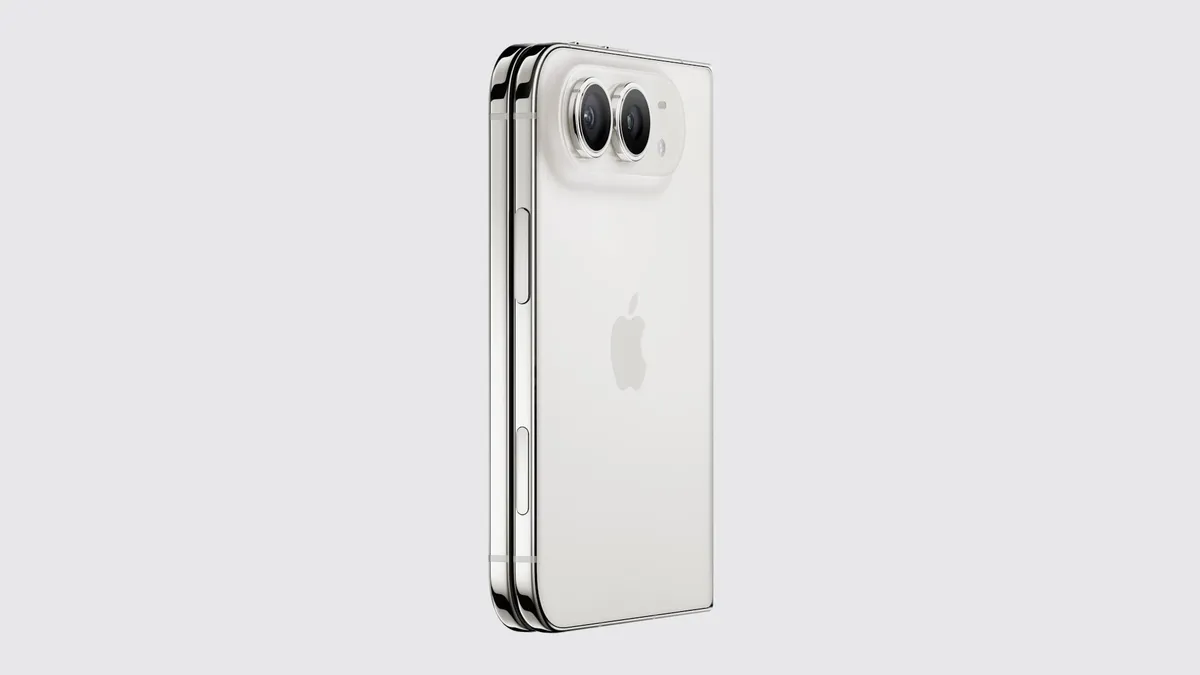
For that extra money you get the folding screen and give up a fair amount. The biggest loss is the camera. The Duo has a 48MP Main camera and a 48MP Ultra Wide, and Apple’s specs page lists no dedicated telephoto lens. Its longest optical-quality zoom is a 2x crop from the main sensor. The Pro models keep a 4x telephoto. MacRumors also notes it skips ProRAW, ProRes and LiDAR.
Size changes too. Closed, the Duo is 84.1mm wide and 11.3mm thick, and it weighs 254 grams. That’s shorter than a Pro Max but noticeably chunkier in a pocket.
So who should pick which?
- Get the Duo if you read, edit documents, watch video or juggle two apps on your phone for long stretches every day, and you’ve been carrying an iPad mini to do it.
- Get the 18 Pro or Pro Max if your phone is mainly for messages, social apps and photos, and especially if you use zoom a lot. You’ll get a better camera and keep $700 or more.
Price vs value
$1,999 is a lot for any phone, and it’s the most expensive starting price Apple has put on an iPhone. The value case depends on whether the Duo replaces something. If it lets you stop carrying a small tablet, the math gets easier. If it’s just a bigger screen you’ll open now and then, it’s hard to justify.
Running costs matter too. Per MacRumors, AppleCare+ with Theft and Loss is $199.99 a year for the Duo versus $149.99 for the Pro models. Without coverage, Apple estimates $999 to fix inner-display damage, and battery service is $229 rather than $129. Treat AppleCare as part of the price if you buy one.
The crease and durability question
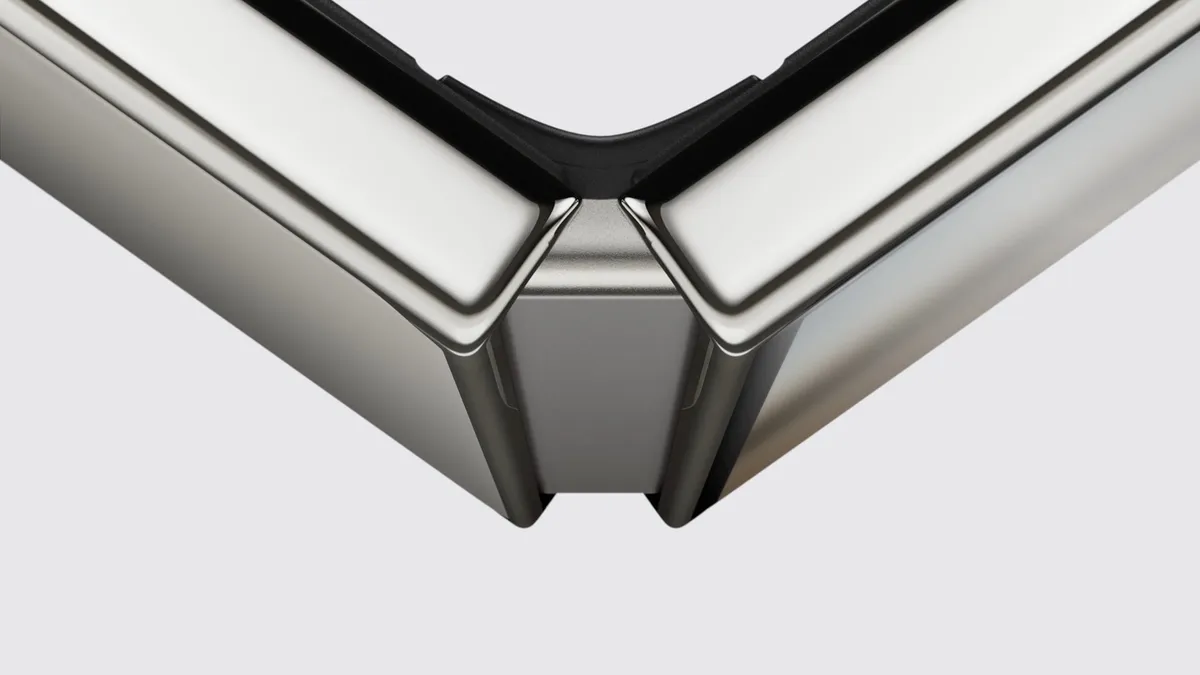
Foldables have always had visible creases, and early models from several brands earned a reputation for fragile screens.
Apple’s answer is a nano-texture matte finish on the inner display, which Apple says reduces glare and minimizes crease visibility. Under that sits a polymer cover layer, glass above and below the folding panel, and a titanium plate at the bottom. TechRadar’s hands-on said it could feel the crease with a finger but couldn’t see it. MacRumors says the crease is still visible in certain lighting. Both can be true.
The thing to keep in mind is that Apple’s durability claims are Apple’s claims. Nobody outside the company has had months of daily use with one yet, and that’s the only real test for a hinge and a folding screen. The inner cover layer is also a wear item. MacRumors reports a replacement costs $49 without AppleCare+.
What eSIM-only means for you
If you’re in the U.S. and already on a major carrier, eSIM probably won’t change much. Apple says more than 500 carriers support it, including AT&T, T-Mobile and Verizon. The specs page lists dual eSIM, with two lines active at once.
It matters more if you travel. You can’t pop in a local physical SIM at an airport kiosk. You’ll need a carrier or travel eSIM service that works where you’re going. It also matters if you’re outside the U.S. MacRumors points out that the 18 Pro still has a nano-SIM slot in markets like the UK and Australia, while the Duo doesn’t.
Should you wait for the second generation?
Usually, yes. First-generation hardware tends to be the most expensive and the least refined version of an idea. Apps also take time to adapt. Apple says Netflix, Zoom and Slack already support the folding design, but plenty of apps won’t on day one.
Waiting also gets you real-world reports on how the hinge and inner screen hold up after a year. If your current phone is fine, you lose very little.
iPhone Duo vs Galaxy Z Fold8
Samsung’s Galaxy Z Fold8 is the obvious comparison, and the two are close on paper. Both have a 7.6-inch inner screen. The Fold8’s cover screen is 5.5 inches to the Duo’s 5.4. Reuters reports the Duo is about $100 more than the Fold8 at comparable base storage. Samsung’s U.S. pricing starts at $1,899 for 256GB.
Where they differ:
- Weight: The Fold8 is 201 grams. The Duo is 254.
- Water resistance: The Fold8 is rated IP48, and the Duo is rated IP68.
- Storage: The Fold8 tops out at 1TB, while the Duo goes to 2TB.
- Cameras: The Fold8 pairs a 50MP main camera with a 50MP ultra wide. The Duo pairs a 48MP main with a 48MP ultra wide. Neither has a dedicated telephoto.
- Software: This is the real decider. If you live in iMessage, FaceTime and the rest of Apple’s ecosystem, the Fold8 isn’t really an option. If you don’t, the Fold8 is lighter, cheaper, and already on the market.
Our take
The iPhone Duo is worth it if you’ll unfold it many times a day for reading, work or video, you’re committed to iOS, and $2,000 plus AppleCare won’t strain your budget. For that person it could replace both a phone and a small tablet.
Everyone else should wait. That includes anyone who leans on zoom photography, anyone who’s happy with their current phone, and anyone who wants proof the folding screen holds up. Read the full reviews when they land, and try one in a store with the phone closed as well as open. A second-generation Duo will almost certainly fix some of what this one gets wrong.
Whichever iPhone you end up with, our guide to the best wireless earbuds covers which pairs work best with it.
FAQ
When does the iPhone Duo come out? Preorders opened on October 16, 2026, and the phone is available from October 23 in the U.S. and more than 70 other countries and regions. Apple says 28 more countries and regions get it on October 30. New U.S. online orders were showing late-January delivery by October 16, though Apple Stores may have limited walk-in stock, and Apple says to check back for pickup from October 24 (Macworld).
Does the iPhone Duo have Face ID? No. It uses Touch ID built into the side button, and you can also unlock it with an Apple Watch.
Can you use a physical SIM card in the iPhone Duo? No. It’s eSIM-only worldwide and supports two active eSIMs at once.
Is the iPhone Duo waterproof? It’s rated IP68, which Apple defines as up to 6 meters for up to 30 minutes. Apple notes that water resistance can decrease with normal wear, and liquid damage isn’t covered under warranty.
Sources
- Apple Newsroom: Apple unveils iPhone Duo (Sept. 9, 2026)
- Apple: iPhone Duo technical specifications
- Reuters: Five takeaways from Apple’s biggest product showcase of the year
- CNN: Apple event live coverage, iPhone Duo pricing
- MacRumors: iPhone Duo Compromises: Everything You Have to Give Up (Oct. 14, 2026)
- TechRadar: iPhone Duo hands-on
- Samsung: Galaxy Z Fold8 specs comparison
- Android Police: Samsung Galaxy Z Fold 8 review (pricing and specs)
- Forbes: iPhone Duo launch timeline, including expected review dates
- MacRumors: iPhone Duo Is Sold Out for Christmas as Shipping Estimates Slip to 2027 (Oct. 16, 2026)
- Macworld: iPhone Duo pre-order live blog (Oct. 16, 2026)